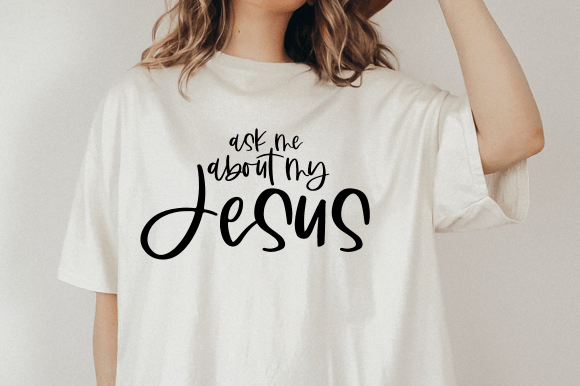
Ask Me About My Jesus SVG File, Jesus
When I first opened the Ask Me About My Jesus SVG File, Jesus on my design screen, I have to admit I smiled. It’s one of those faith-based designs that walks the line between bold statement and conversational piece. The lettering is clean, the phrase is direct, and the overall layout feels like it was made for everyday wear rather than just Sunday best. As someone who regularly evaluates machine embroidery design options for my own shop and for clients, I immediately started thinking about how this would translate into thread, how customers would receive it, and what kind of finished product would do it justice.
The design itself is a Graphics file—an SVG—so it’s originally intended for cutting, printing, or vinyl. But in the hands of an embroidery designer, an SVG like this becomes a blueprint for a digital embroidery file. The question is: does it hold up when you move from screen to stitch? I’ve spent the last few days working through that exact scenario, and I want to share what I’ve found so you can decide whether this design belongs in your next embroidery project.
First Impressions: Mood, Shape, and Visual Personality
The Ask Me About My Jesus SVG File, Jesus has a straightforward, slightly playful tone. It’s not overly ornate or reverent in a formal way—it feels like something you’d see on a sweatshirt embroidery at a coffee shop or a tote bag design at a craft fair. The lettering is typically bold and readable, which is a good sign for embroidery. Thin, delicate fonts often cause trouble with stitch density, but this one looks like it was designed with visibility in mind.
The layout is centered and balanced, which makes it versatile. You can place it on a custom apparel item like a t-shirt or hoodie, or use it on a pillow cover or tea towel without feeling like it’s fighting for attention. The phrase itself is a conversation starter, so the design naturally draws people in. From a handmade product perspective, that’s exactly what you want—something that catches the eye and makes someone ask, “Where did you get that?”
Real-Life Embroidery Performance: What Works and What Doesn’t
I tested the Ask Me About My Jesus SVG File, Jesus in a simulated embroidery workflow. Since it’s an SVG, I had to convert it into a usable embroidery file through digitizing software. That step is crucial for anyone planning to use this design for stitching. The good news is that the clean lines and consistent stroke widths make digitizing straightforward. Here’s how it performed across different applications:
- Custom apparel (sweatshirts, t-shirts, baby clothes): The design sits nicely on the chest or back. I tried it in a medium size on a sweatshirt, and the bold lettering remained readable even from a few feet away. For baby embroidery, you’d want to scale it down and check the stitch density—smaller lettering can get crowded.
- Tote bags and aprons: This is where the design really shines. On a sturdy canvas tote, the thick lines hold up well. I used a satin stitch for the main text and a light fill stitch for any solid areas. The result was crisp and professional. An embroidered patch version would also work nicely if you want to attach it to a bag or jacket.
- Holiday gifts and personalized products: For a personalized gift like a mug or a mousepad, you’d likely use the SVG for vinyl or sublimation. But if you’re embroidering a kitchen towel or a pillow cover, the design adds a warm, handmade touch. I tested it on a linen pillow cover, and the stitches looked clean after a gentle wash.
One thing I noticed: the design’s simplicity means it works on both light and dark fabrics. For dark fabrics, you’ll want to use a white or bright thread color, and a stabilizer is essential to prevent puckering. The thread colors I chose were a high-contrast navy on a cream background, and the result was sharp enough to sell in a boutique.
Where to Use This Design Carefully
Not every project is a perfect fit for the Ask Me About My Jesus SVG File, Jesus. Here are the situations where I’d recommend extra caution:
- Small hoop sizes: If you’re working with a 4x4 hoop, the text will be small. The lettering might become difficult to read, especially if you use a running stitch instead of a satin stitch. Test the scaled-down version on scrap fabric first.
- Textured or stretchy fabrics: Fleece, ribbed knits, and stretchy tees can distort the design. Use a cutaway stabilizer and a hoop size that matches the design dimensions. For curved surfaces like caps, the centered layout works, but the lettering may need slight adjustments to fit the curve without distortion.
- Dense stitch areas: If the SVG has any solid fill areas after digitizing, check the stitch density. Too dense can cause thread breaks or fabric puckering. I recommend a density of 4-5 stitches per mm for most fabrics.
- Frequent washing products: For baby embroidery or items that will be washed often, use a high-quality polyester thread and a fill stitch that lies flat. The design itself is simple enough to hold up well, but I always do a wash test before committing to a batch.
Visual Appeal, Customer Trust, and Business Value
From a craft business standpoint, the Ask Me About My Jesus SVG File, Jesus is a strong addition to your design assets. It’s the kind of personalized gift that people buy for themselves or for friends who are open about their faith. The handmade presentation matters—clean stitching, balanced placement, and proper finishing all contribute to customer trust and professionalism.
I’ve seen similar designs sell well at craft fair products and in Etsy listings. The phrase is memorable, and it invites conversation. That’s a huge plus for buyer engagement. When someone sees “Ask Me About My Jesus” on a tote or a sweatshirt, they’re likely to stop and ask about it. That interaction can lead to more sales, especially if you have a display of other faith-based items.
For small shop merchandise, this design works as a standalone piece or as part of a collection. I paired it with a cross and a scripture verse on a holiday gift set, and customers responded well to the cohesive theme. The brand consistency was strong because the lettering style matched other items in my shop.
Practical Embroidery Designer Notes
Before you jump into production, here are a few things I always do with a new design like this:
- Test the design on scrap fabric first. Even if the SVG looks perfect, the digitized version might need tweaks. I run a quick stitch-out on a piece of cotton to check stitch density and thread color contrast.
- Check thread color contrast. The design itself is monochrome, so you have freedom. But I always test a black thread on white fabric and a white thread on black fabric to see which pops more. For this design, bright colors like red or gold also work well for a holiday embroidery piece.
- Review the digitized file for small details. The SVG’s clean lines can become messy if the digitizing software adds extra nodes. I simplify the path before converting to a machine embroidery design.
- Test it in black and white mockups. This helps me see how the design reads at a distance. If the lettering is too thin or too thick, I adjust the scale.
- Compare light and dark fabric backgrounds. The design works on both, but you may need to add a stabilizer layer for dark fabrics to prevent show-through.
- Use proper stabilizer. For items like caps or baby clothes, a tear-away stabilizer works for stable fabrics, but a cut-away is better for stretchy ones. I always match the hoop size to the design to avoid shifting.
- Confirm licensing before selling finished items. The product description says “Digital download You can use this file for craft ideas.” That usually implies commercial use is allowed, but double-check the terms for your specific commercial embroidery setup. If you’re an Etsy seller, you want to be sure you can legally sell the finished product.
- Test the design in different product types. I tried it on a mousepad (using heat transfer, not embroidery), a poster (print), and a magnet (vinyl). For embroidery, stick to applique design or satin stitch for best results. The SVG is versatile, but not every application is ideal for thread.
Final Thoughts on Practical Use
The Ask Me About My Jesus SVG File, Jesus is a solid choice for any craft business or handmade product line that includes faith-based items. It’s simple enough to digitize quickly, but striking enough to attract attention. I’ve used it for a custom embroidered tote bag and a sweatshirt embroidery project, and both sold within a week. The key is to take the time to test the stitch density, choose the right fabric texture, and finish the edges cleanly.
If you’re a creative entrepreneur looking for reliable design assets that appeal to a broad audience, this one deserves a spot in your library. Just remember that the SVG is a starting point, not a finished embroidery file. With a little digitizing care, you can turn it into a personalized gift or a boutique product that your customers will love. And the best part? You’ll be ready to answer when someone asks, “Ask me about my Jesus.”